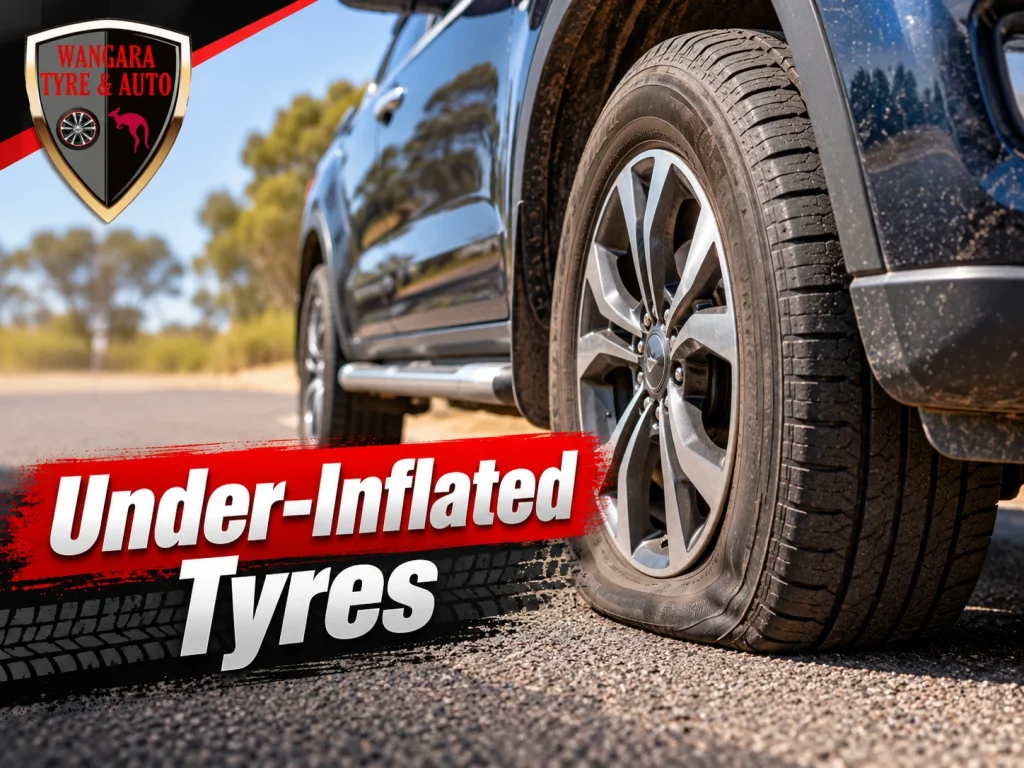
Your tyres might look fine, but could they be putting you at risk? Under-inflated tyres can affect steering, increase stopping distances, build up excess heat and wear out faster than expected. The tricky part is that low pressure isn’t always easy to spot by eye.
For Perth drivers, a simple tyre pressure check can make a real difference, especially before a long trip or during wet weather. But how low is too low, and what should you do if your tyre keeps losing air?
Below, we cover what low pressure does to your tyres, why over-inflation isn’t the fix, where to find your correct pressure, and the warning signs that mean it’s time for a professional check.
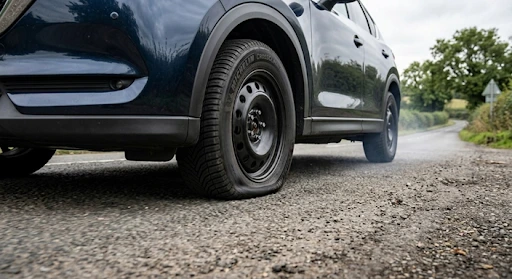
Why Are Under-Inflated Tyres Dangerous?
Under-inflated tyres are dangerous because they weaken the only part of your car that touches the road, and the problem usually creeps up without warning.
Your Tyres Are Your Car’s Only Grip on the Road
Every time you steer, brake or accelerate, four small patches of rubber do all the work. Transport Victoria notes that in emergency braking, steering or cornering, your tyres play a large role in how things end. A properly inflated tyre holds the shape it was designed for, so it grips, steers and stops the way it should. Let air out, and the tyre starts to sag, flex and lose that precision, right when you might need it most.
Why Low Pressure Is So Easy to Miss
Low pressure rarely announces itself. All tyres slowly lose air, so the drop can happen gradually over weeks. Many modern tyres also look almost normal even when they’re well below the right pressure. Pressure shifts with temperature too, so a tyre that seemed fine on a hot afternoon can read lower on a cool morning. A gauge beats a quick look every time.
What Happens When Tyre Pressure Is Too Low?
When tyre pressure is too low, the tyre squashes and flexes more than it should with every turn of the wheel. Picture a footy that’s gone a bit soft: it still bounces, just not the way it should. That extra squish affects your car in five key ways.
Slower Steering and Weaker Braking
Low pressure can make your car feel lazy. Steering may turn heavy or vague, like the car is half a step behind you, and the sidewalls give way more in corners. Braking can suffer too, because the tyre isn’t meeting the road the way it was designed to. You might never notice on your commute, but you could in an emergency stop.
Wet-Weather Grip and Aquaplaning Risk
Your tyres’ tread is designed to channel water out from under the tyre so the rubber stays in contact with the road. Correct pressure and enough tread depth both help it do that job. Aquaplaning also depends on your speed, the depth of the water and the condition of your tread, so no single factor decides it. Still, when Perth’s winter rain rolls in, keeping your pressure right and your tread healthy gives you the best chance of gripping, not gliding.
Heat Build-Up and Blowout Risk
Under-inflated tyres can overheat because all that extra flexing creates heat, like bending a paperclip back and forth until it warms up. Long highway runs, scorching Perth summers and heavy loads all add to it. Too much heat can weaken a tyre’s internal structure over time and, in serious cases, contribute to tread separation or a blowout.
Uneven Wear and Sidewall Damage
Low pressure causes uneven wear because the tread no longer sits flat on the road. Tyre sidewalls are meant to flex a little to soak up bumps. When they flex too much, the outer edges (the shoulders) usually wear faster than the centre, so you’re buying new tyres sooner than you should.
Driving on a very low tyre can also cause tyre sidewall damage from the inside that isn’t visible from the outside. A tyre that’s been driven on while very low should be properly inspected before you trust it again.
Higher Fuel Use and Shorter EV Range
Under-inflation can increase fuel use because a soft tyre has more rolling resistance. It’s like riding a bike on half-flat tyres: you’ll get there, but every pedal stroke takes more effort. In an electric vehicle, it can mean less range per charge. The exact difference depends on the car, the tyres and how low the pressure is.
Under-Inflated vs Over-Inflated Tyres: Which Is Worse?
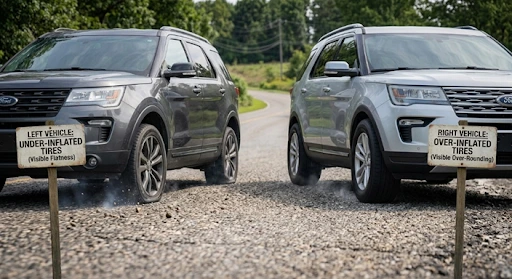
Neither is the safer choice; under-inflated and over-inflated tyres are risky in different ways. So “a bit of extra air, just in case” isn’t a safety buffer. The goal is the pressure your vehicle manufacturer recommends.
The Hidden Risks of Over-Inflation
Over-inflation of tyres makes them stiffer, which can change how the tread meets the road. The ride gets harsher, the centre of the tread can wear faster, and potholes may do more damage. Going well beyond safe limits is a genuine hazard, too. In a 2026 safety bulletin, WorkSafe WA lists over-inflating tyres beyond the manufacturer’s specifications among the hazards linked to tyre and wheel failures during inflation.
Under vs Over-Inflation at a Glance
|
Tyre pressure issue |
What it can do |
What to do |
|
Too low |
Excess flexing, heat build-up, edge wear, vague handling |
Inflate to the recommended pressure, checked cold |
|
Too high |
Harsher ride, centre wear, more impact damage |
Adjust to the recommended pressure, checked cold |
|
Keeps dropping |
Possible puncture, leak or valve problem |
Get the tyre inspected |
|
Cuts, cracks or bulges |
Tyre may be unsafe |
Don’t drive on it; get professional advice |
How to Check and Inflate Your Car Tyres Correctly
To inflate your car tyres correctly, check them cold with a gauge and fill them to the pressure your vehicle manufacturer recommends. Here are the essentials; for the full walkthrough, see our step-by-step tyre pressure guide.
Find Your Correct Tyre Pressure on the Placard
Your car’s magic number lives on a sticker called the tyre placard. Transport Tasmania notes cars have carried one since 1973, listing recommended tyre sizes and pressures. Look inside the driver’s door frame, in the glovebox or on the fuel flap, or check your owner’s manual. Front and rear pressures often differ, so read the whole sticker, not just the first number you see.
Why the Sidewall Number Isn’t Your Target
Here’s an easy trap: using the number moulded into the tyre sidewall. That figure is the maximum inflation pressure set by the tyre’s manufacturer, not the everyday pressure your car needs. Treat it as a ceiling, never a target. SafeWork NSW also warns against going beyond the manufacturer’s maximum cold pressure. If you’ve fitted a different tyre size from the original, ask a tyre professional what pressure suits your setup.
A Quick Pressure Check in Five Steps
- Start cold. Check before you drive, or after the car’s been parked for a few hours.
- Cap off, gauge on. Press the gauge firmly onto the valve and read the number.
- Top up to the recommended figure, then check again.
- Hot tyres? Hands off the release. Warm tyres read high, so don’t let air out to match the placard. Recheck once they’ve cooled.
- Cap back on, and check the spare. The cap keeps dirt out of the valve.
Tyre Pressure for Loads, Towing and 4x4s
Carrying extra passengers, packing for a road trip or towing a caravan? Check your placard and owner’s manual for the right pressure for that load. Some vehicles list a separate figure, and others don’t. Don’t guess, and never go beyond the manufacturer’s instructions.
If you’ve aired down your 4×4 for sand or a beach run, pump back up to road pressure before driving at normal road speeds.
Our guide to 4×4 tyre pressure for different terrains covers this in detail. At Wangara Tyre & Auto, we’re 4×4 owners ourselves and can help you choose the right 4×4 tyres for your setup.
How Often Should You Check Tyre Pressure?
Check your tyre pressure at least once a month and before any long trip. Ensuring tyres are at the right pressure is one of the cheapest safety checks you can do.
Make It a Monthly Habit
The easiest way to remember is to tie it to something you already do, like your first fuel stop each month. Check more often if you tow, carry heavy loads or have a tyre that’s always thirsty for air. Transport WA lists tyres among the items every driver should check regularly, including correct pressure, tread depth and damage to the tyre body.
Is a Tyre Pressure Warning Light Enough?
A tyre pressure monitoring system (TPMS) is a handy backup, but it’s no substitute for a regular check with a gauge. It matters even more if your car has run-flat tyres. Transport Victoria explains that run-flats must only be fitted to vehicles with a working TPMS or similar warning system, because they show little sign of deflation until the tyre fails. Always follow your vehicle and tyre manufacturer’s guidance for run-flats.
Warning Signs of Common Tyre Issues
Common tyre issues usually show up in how your car feels or how your tyres look. Catching them early can save you a tyre, or prevent something far worse.
Signs You Can Feel While Driving
- the car pulling or drifting to one side
- steering that feels heavier or less sharp than usual
- a new vibration or wobble through the steering wheel
- a tyre pressure warning light on your dashboard
Pulling and uneven wear can also point to a wheel alignment problem, and a vibration can mean your wheels need balancing.
At Wangara Tyre & Auto, we offer laser wheel alignment plus free diagnosis and brake checks as part of our tyre services.
Signs You Can See on Your Tyres
- one tyre that needs air more often than the others
- wear on the outer edges (often low pressure) or down the centre (often over-inflation)
- cuts, cracks or bulges in the sidewall
- tread wearing down towards the tread wear indicators
On tread, Transport WA’s checklist says tread depth should be 1.5 mm or more. Treat that as the minimum, not a target. Worn tread generally can’t clear water as well, so it’s worth replacing tyres before they get that low.
When Should You Seek Professional Tyre Advice?
Get professional advice whenever a tyre keeps losing air, shows damage, or has been driven on while very low. An inspection will tell you whether it can be safely repaired or needs replacing.
When to Stop Driving Immediately
If a tyre looks flat, is losing air quickly, or has cuts, cracks or bulges, don’t keep driving on it. Transport Victoria says tyres with damage likely to cause failure must be removed from the vehicle. Pull over somewhere safe, fit the spare if it’s safe to do so, or call your roadside assistance provider.
Why Quick Puncture Fixes Aren’t Permanent
Transport Victoria’s guidance, based on the national Tyre and Rim Association repair procedure, explains that a proper puncture repair means taking the tyre off the rim to inspect it from the inside. Plugs pushed in from outside are an emergency measure only, and repairs aren’t allowed in the sidewall, shoulder or bead. Tyre inflation kits are for emergencies too, so get the tyre checked properly afterwards.
Choosing Suitable Tyres When It’s Time to Replace
If a tyre is past saving, choosing suitable tyres for your vehicle is the next step. Not sure if it’s time? Here are the signs your car tyres need replacing. Wangara Tyre & Auto stocks a wide range of tyre brands for cars, 4x4s and trucks.
Not Sure About Your Tyres? Swing By Wangara Tyre & Auto
Proper care of the tyres starts with knowing where they stand, so don’t guess. Swing by 3/220 Gnangara Rd, Landsdale, and we’ll check or diagnose your tyre issues for free and tell you straight what we find.
Got a puncture? We offer fast repairs. Time for new tyres? They’re fitted while you wait, with an air-conditioned waiting room to relax in. Hundreds of drivers have given us five stars on Google, and we’d love to show you why.
Call 08 6201 7490 or send us a message.
Frequently Asked Questions
Can I drive a short distance on under-inflated tyres?
It depends on how low the tyre is and what condition it’s in. If it looks flat, is losing air quickly or has visible damage, don’t drive on it. Use the spare or call for assistance. If it’s only slightly low and looks undamaged, drive slowly and carefully to the nearest air pump, then check it properly.
What should I do if my tyre pressure warning light comes on?
When it’s safe, pull over and look at your tyres. If one is clearly low or damaged, don’t keep driving on it. If they look fine, check all four with a gauge and inflate to the recommended pressure. If the light keeps returning, have your tyres inspected.
Can under-inflated tyres cause a blowout?
They can contribute to one. Extra flexing builds heat, and heat can weaken a tyre. Not every low tyre will fail, but the risk climbs with lower pressure, higher speeds, heavier loads and hot weather.
Why does one of my tyres keep losing air?
It’s often a slow puncture, but it can also be a faulty valve, a leak where the tyre seals against the wheel, or a bent rim. Topping it up only buys time.