Buying New Tyres in Wangara: Why Cheap Tyres Cost You More in the Long Run
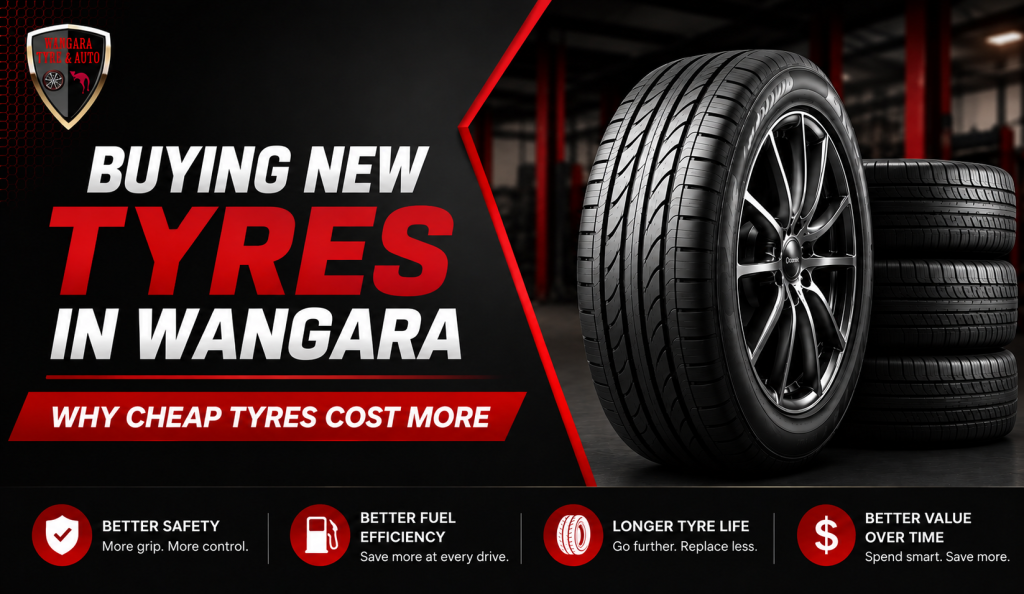
Buying new tyres doesn’t mean you need the most expensive set, but going straight for the cheap ones can cost you more in the long run. Why? A good tyre is one that fits your car, suits the way you drive and gives you reliable performance for the money. Even budget tyres can offer great value when they’re right for the job.
So, what should you actually pay for, and where can you save when buying brand new tyres? This guide looks beyond the price tag to help you choose new tyres that make sense for your car, your driving and your budget.
Are Cheap Tyres Really Cheaper in the Long Run?
Not necessarily. A lower price tag doesn’t determine value on its own. What matters is how many kilometres you get out of a tyre and how often you’re back replacing it. Two differently priced tyres can cost about the same per kilometre once usable tread life is factored in.
| Example | Tyre A | Tyre B |
| Fitted price | $150 | $210 |
| Example usable life | 30,000 km | 50,000 km |
| Cost per 1,000 km | $5.00 | $4.20 |
These figures are illustrative only, not actual or a guaranteed tyre lifespan. Real-world results depend on the tyre, the vehicle and how it’s driven.
The point still stands: the lower sticker price isn’t automatically the cheaper option once you look at cost per kilometre.
What Is the Difference Between Budget and Quality Tyres?
Budget and quality tyres mainly differ in their materials, construction, tread design, performance and expected lifespan. Budget tyres can be a practical choice for everyday driving, while higher-quality tyres offer better grip, durability, comfort or performance for more demanding driving conditions.
When Can Budget Tyres Be a Good Choice?
Budget tyre can a good option for moderate travelling around Wangara and Perth’s northern suburbs, without towing or heavy loads. A well-chosen budget tyre can perform well without paying for features you don’t need.
When Can Higher-Quality Tyres Be Worth Paying For?
Higher-quality tyres earn their price back for high annual kilometres, regular highway driving, towing, heavier loads, or 4WD and off-road use, where grip, longevity and comfort matter more than upfront price.
According to Continental’s new tyre purchase guide, the starting point for any tyre purchase should be your vehicle’s compatibility requirements, including size, load index and speed rating, with driving style and budget shaping the choice from there rather than price leading the decision.
For a closer look at how budget and premium tyres compare in Australian conditions, see our budget vs premium tyres guide.
How Can the Wrong Cheap Tyres Cost You More?
A low-priced tyre becomes false economy when it doesn’t hold up to your vehicle’s demands. The added cost tends to show up in one of five ways:
- Shorter useful life. In cases where a tyre wears out faster than anticipated, it becomes less likely that the cost saving at first will make sense in the long run. However, this is not true in all cases of budget tyres.
- Higher rolling resistance. This is the energy needed to keep a tyre turning. It varies between models. Higher rolling resistance means your engine works harder. This shows up as extra fuel use.
- Grip and braking performance. Both wet and dry grip play a role in how your car brakes and corners. This is especially true during winter in Perth when it rains.
- Noise, comfort and handling. Tread pattern and construction influence road noise, ride comfort and cornering response. There are the differences you’ll notice on every drive.
- Poor suitability for the job. A tyre built for light passenger use won’t necessarily hold up to heavy loads, highway kilometres or off-road driving, regardless of price.
Once you know where the hidden costs come from, choosing tyres that avoid them is the next step.
How Do You Choose the Right New Tyres Without Overspending?
When purchasing tyres, first take into consideration your vehicle’s recommended tyre specifications. Next, compare your choices based on how and where you drive. Consider tyre size, load and speed rating, performance characteristics, expected tread life, ride, use, warranty and total fitted cost before making your choice. Here’s how?
Check the Correct Tyre Size and Ratings
Your sidewall carries a code such as 215/60 R16 95V. Width in millimetres, aspect ratio, radial construction, rim diameter in inches, then load index and speed rating. Before buying a tyre, check your vehicle’s tyre placard and owner’s manual for the manufacturer’s requirements.
| Marking | Meaning |
| 215 | Tyre width in millimetres |
| 60 | Sidewall height as a percentage of tyre width |
| R | Radial construction |
| 16 | Rim diameter in inches |
| 95 | Load index |
| V | Speed rating |
Do not choose a tyre just because its diameter appears correct. Load capacity, speed rating and other vehicle requirements also matter.
Match the Tyre to Your Driving
Daily suburban commuting and freeway driving around Perth call for different tyre characteristics than towing, commercial use or weekend 4WD trips. Be honest about how the vehicle is actually used, not just how it’s used occasionally.
Compare Performance and Expected Life
Weigh up grip, durability, comfort, road noise and expected tread life side by side, rather than defaulting to whichever tyre is cheapest on the day.
Compare the Full Fitted Price
Sticker prices don’t tell the full story. Check what’s included in the quote; fitting, balancing, any disposal charges and warranty, before comparing tyres purely on cost.
Ask for Options Within Your Budget
A good fitter should talk you through the trade-offs between suitable tyres at different price points.
Which New Tyres Suit Your Vehicle and Driving Needs?
The right tyre depends on the vehicle, its load and how it’s driven. A daily commuter, family SUV, off-road 4WD and commercial truck can each need very different tyre characteristics, even when affordability matters to every driver.
| Vehicle or use | What to prioritise |
| Passenger cars | Grip, comfort, noise, durability, value |
| SUVs | Load suitability, stability, comfort, road use |
| 4x4s | Highway vs all-terrain use, durability, traction |
| Vans | Load requirements, durability, commercial kilometres |
| Trucks | Load capacity, operating conditions, durability |
For a 4WD, our 4×4 tyres range covers highway and all-terrain use. Also, our truck tyres range is built around load capacity for commercial vehicles.
What Should You Check When Fitting Brand New Tyres?
Correct fitting is only part of getting good value from brand new tyres. Wheel balance, alignment, correct inflation and regular checks all help tyres perform properly and wear evenly.
- Wheel balancing helps avoid vibrations because of unequal distribution between wheel and tyre.
- Wheel alignment essential to align wheels since misalignment results in uneven wearing of tyres.
- Tyre pressure should match the manufacturer’s recommended figures, not a generic guess.
- Regular checks of pressure, tread and visible damage catch problems early.
We include wheel alignment and balancing as part of our fitting service. So, you don’t have to arrange these services separately.
Where Can You Buy Quality New Tyres in Wangara?
Look for a tyre shop in Wangara that can match tyres to your vehicle. Explain your options across price points, provide professional fitting, and clearly state what’s included in the price.
Wangara Tyre & Auto has been fitting tyres in Wangara for over ten years. We are supplying cars, SUVs, 4x4s, vans and trucks with tyres from a range of recognised brands. Every new tyre includes professional fitting and a one-year warranty, and we’re upfront about what’s covered before you commit. We also offer wheel balancing and alignment, brake checks and fast puncture repairs from our Wangara workshop, close to Wanneroo and Pearsall.
Browse our full tyres and services range or see our partner tyre brands to find the right fit.
We stock tyre to suit every budget, not just one price point. Leading brands we supply include Dunlop, Kumho, Sailun, Hercules and Road March. This gives you real choice across value and premium options.
See our guide to finding the best tyre brands in Australia for a closer comparison.
FAQs About Buying New Tyres
Are budget tyres worth buying?
Yes, when they suit your vehicle and driving conditions. Compare suitability, performance, expected life and full fitted cost rather than judging on price alone.
How do I know which new tyres fit my car?
Consult the tyre specification details from the placard or the owner’s manual, which is available in your car. Ask the tyre fitting expert to recommend tyres for you within those specifications.
Should I replace two tyres or all four?
It depends on the condition of your existing tyres, your drivetrain and your driving requirements. Have your current tyres inspected before deciding.
Do new tyres need a wheel alignment?
Not automatically. But it’s worth checking if there’s uneven wear, the car pulls to one side, or you notice other steering issues.
Where can I buy brand new tyres in Wangara?
Wangara Tyre & Auto stocks brand new tyres for cars, SUVs, 4x4s, vans and trucks, with professional fitting and a one-year warranty included. Call at 0421 105 160 or visit our Wangara workshop to compare options.
Why pay twice for tyres that weren’t right the first time?
Get the Right New Tyres in Wangara at the Right Price
Choosing the wrong tyre the first time doesn’t just cost you at the fitting counter, it costs you again in early replacement, poor fuel economy or a driving experience that never quite matches your vehicle’s capability.
Wangara Tyre & Auto helps you compare suitable new tyres across brands and budgets, matched to your vehicle and how you actually drive, with professional fitting and a one-year warranty on every set.